
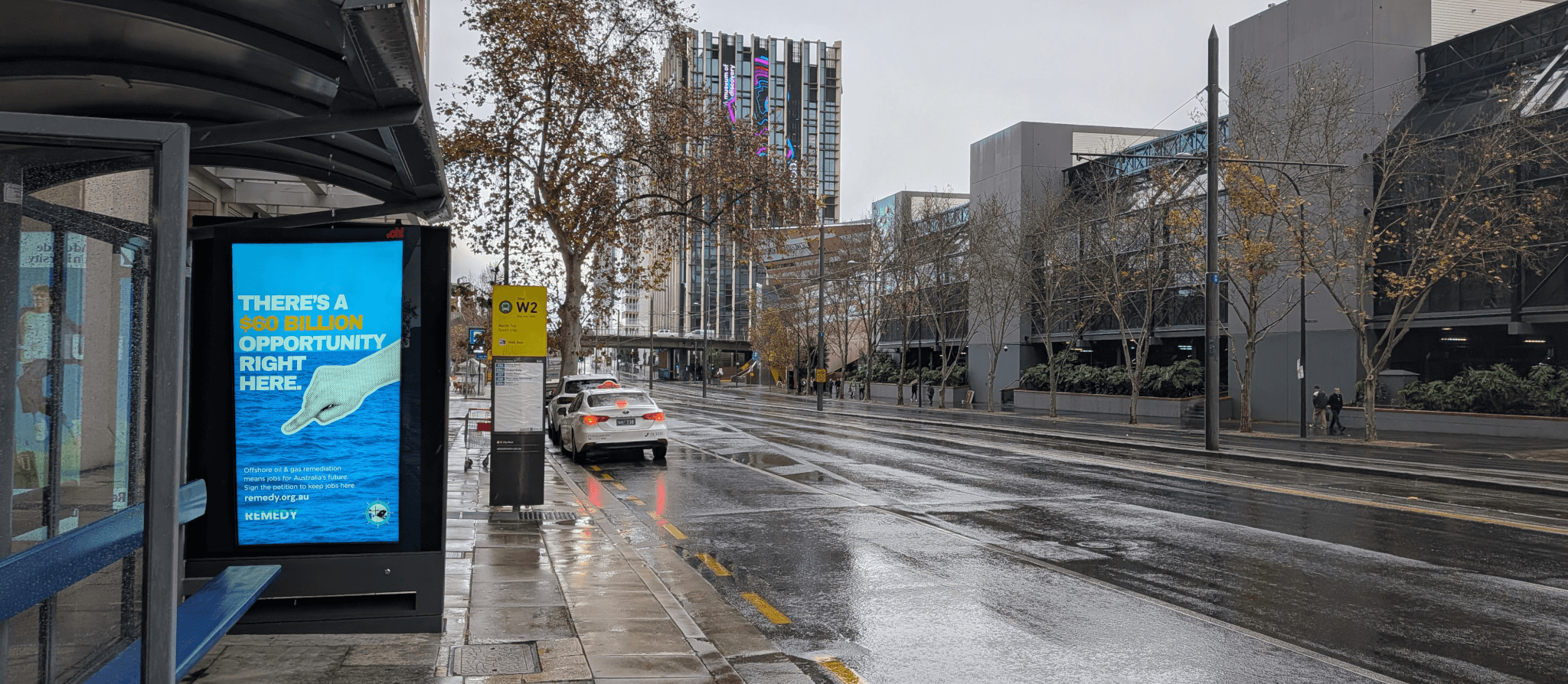
The ALP National Conference is in Adelaide this week, so the mighty MUA decided to welcome delegates with a micro out-of-home ad campaign.
At bus shelters and on billboards immediately surrounding the conference centre and nearby hotels, we’re running creative designed to catch the attention of insiders (and bewilder everyone else).


Remedy is the MUA’s national campaign for a domestic decommissioning and recycling industry. Over the next ten years millions of tonnes of offshore oil and gas infrastructure will reach end-of-life and need to be dismantled and removed. That work could be done here – creating jobs and recycling an astounding 3.7 million tonnes of steel for domestic use – but without tighter regulation the oil and gas giants will try to do it on the cheap, leaving tonnes of degrading waste on the ocean floor for future generations to clean up and sending the opportunities elsewhere.
The MUA has lobbied for support for a decommissioning industry to become part of the ALP’s draft national policy platform – point 149. A platform for offshore platforms.
Meanwhile MUA activists are calling for help to build pressure on the politicians to close loopholes and hold big oil and gas to their legal obligations. Without action now, future generations of Australians will foot the bill for ocean cleanup.
To maximise value from a tiny budget, the MUA bought only the ad spaces directly surrounding the conference venue, and timed them to play only when traffic to and from the conference would be highest.
Inconsistency in “political” campaign approvals
Like a number of other campaigns, the MUA’s ads were rejected from Adelaide airport for being “political adjacent”. Ads from Woodside and the gas industry continue to run unimpeded.
To publishers, marketing and promotion of the status quo is viewed as uncontroversial even when the status quo harms people and the environment. Meanwhile campaigns promoting a change – even a wildly popular or uncontroversial change – are viewed suspiciously as ‘political’. Sometimes advertisers will even explicitly state that only commercial advertisements are accepted – unless your ads are about selling something to a consumer, we’re not interested.
This is frustrating enough when dealing with commercial advertising publishers – but when even state-owned assets are off limits to community, something is clearly amiss. According to JCDecaux (also the owners of the ad spaces at Adelaide airport) there is a blanket ban on trade unions purchasing ad wraps on the Victorian tram network.
The tools for out-of-home have had a digital upgrade, but they are still the master’s tools.
Leave a Reply